

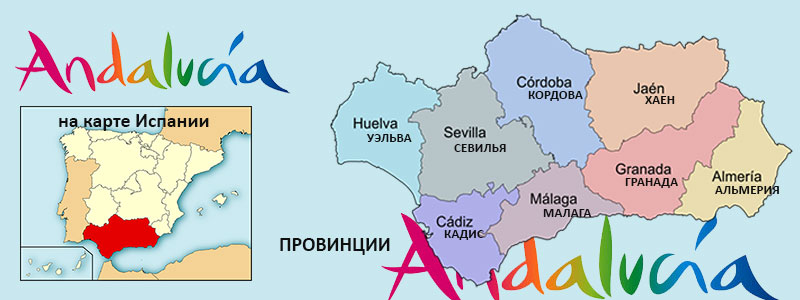
 Andalusia is located in the south of the Iberian Peninsula. It is washed by the Atlantic Ocean on one side and the Mediterranean Sea on the other, and they meet at the Strait of Gibraltar, from where it is a stone's throw to the shores of North Africa. The autonomous community is the largest in the country by population – 5.9 million people – and the second largest by area, at 87,300 square kilometers. It includes eight provinces: Cadiz, Almeria, Cordoba, Huelva, Malaga, Seville, Jaen, and Granada.
The climate diversity in the region is amazing – in Seville, temperatures can reach +47 degrees in summer and +25 degrees in winter, and in the Sierra Nevada there is a famous ski resort – the southernmost in Europe, it celebrated its centenary in 2014 – and the snow season lasts up to five months. The only Tabernas desert in Europe is located here, and precipitation there is very little. At the same time, in the Sierra Grazalema Natural Park there is a lot of rain in the winter.
Ispantsy ochen' berezhno otnosyatsya k prirode. Zdes' mnogo zapovednykh territoriy, iz nikh dva natsional'nykh zapovednika Don'yana i S'yerra Nevada ob"yavleny YUNESKO zonami biosfernykh rezervov. Samym bol'shim schitayetsya park Don'yana, zdes' mnogo ozer, a tak zhe protekayet yedinstvennaya v Ispanii sudokhodnaya reka Guadalkivir. Ekosistemy sokhraneny blagodarya tomu, chto v etikh mestakh nikogda ne davali razresheniye na stroitel'stvo lyubogo formata. Kraya territorii okaymleny zhivymi dyunami - oni sozdayutsya i peredvigayutsya pod vozdeystviyem vetrov s Atlantiki. Zapovednik Kabo de Gata sostoit iz vulkanicheskikh utesov, solyanykh otmeley i peschanykh bukht. Peyzazhi ochen' izvestnogo istoricheskogo ansamblya Torkal' udivlyayut neobychnymi formami skal i kamney raspolozhennoy na massivnom izvestnyakovom plato, ikh vozrast ochen' pochtennyy - okolo 160 millionov let. Nachinali sozdavat'sya eti udivitel'nyye pamyatniki prirody na dne okeana v period mezozoyskoy ery. Iz zhivotnykh i ptits v parkakh zhivut – ispanskiye rysi, oleni, kosuli, vydry, muflony, pireneyskiye kozly, iberiyskiye volki, flamingo, sipy, orly-mogil'niki i dr. Flora predstavlena ital'yanskoy i chernoy sosnami, probkovymi, kamennymi i skal'nymi dubami, rozhkovym derevom, mirtom, mastikovym derevom, kolyuchim derevom yuyuba, tridtsat'yu vidami orkhidey, gornymi fialkami, dikimi rozami i mnogimi drugimi vidami rasteniy.
The Spanish are very careful with nature. There are many protected areas here, two of which, Doñana and Sierra Nevada National Parks, have been declared biosphere reserve zones by UNESCO. Doñana Park is considered the largest; it has many lakes, and the only navigable river in Spain, the Guadalquivir, flows through it. Ecosystems have been preserved thanks to the fact that no construction permits of any kind have ever been given in these places. The edges of the territory are bordered by living dunes - they are created and moved by the winds from the Atlantic. Cabo de Gata Nature Reserve consists of volcanic cliffs, salt flats and sandy bays. The landscapes of the very famous historical complex of Torcal amaze with the unusual shapes of rocks and stones located on a massive limestone plateau, their age is very venerable - about 160 million years. These amazing natural monuments began to be created on the ocean floor during the Mesozoic era. Of the animals and birds living in the parks are Spanish lynxes, deer, roe deer, otters, mouflons, Pyrenean ibexes, Iberian wolves, flamingos, vultures, imperial eagles and others. The flora is represented by Italian and black pines, cork, holm and sessile oaks, carob trees, myrtle, mastic trees, prickly jujube trees, thirty species of orchids, mountain violets, wild roses and many other plant species.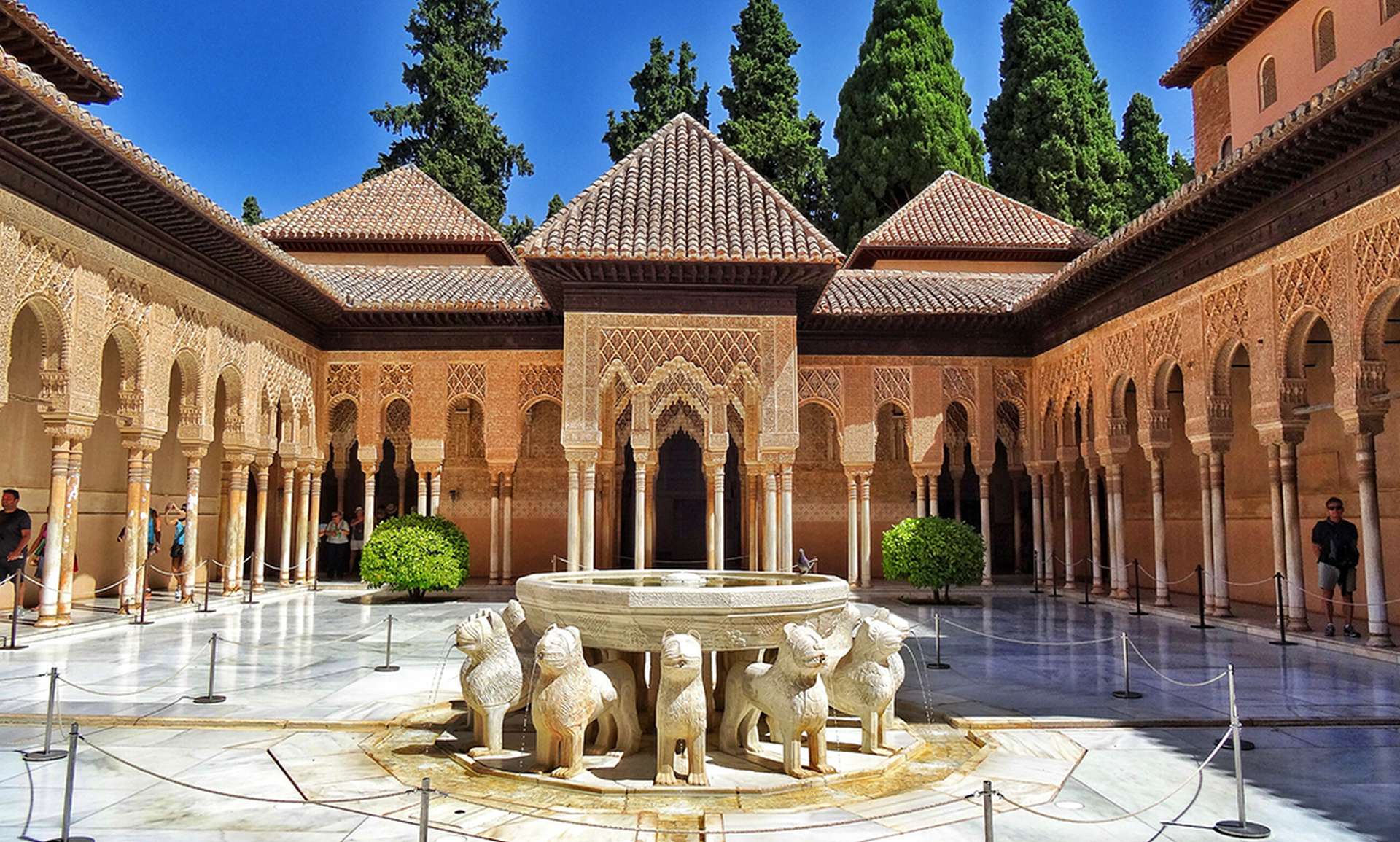
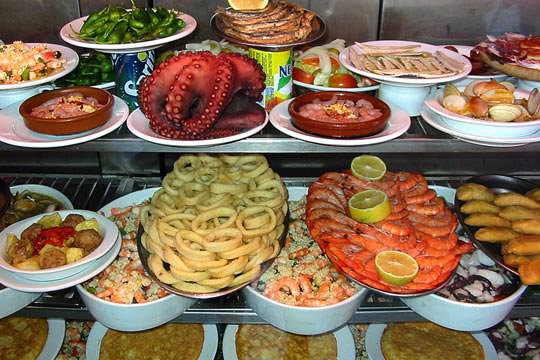
The 836 kilometers of coastline are divided into four tourist zones: Costa del Sol, Costa del Luz, Costa del Tropical, and Costa del Almería. They are popular for their sunshine, clear waters of the Mediterranean and Atlantic Oceans, well-developed tourist infrastructure, numerous entertainment options for adults and children, and Mediterranean cuisine, renowned for its delicious flavors and fresh produce.
Tourists come not only to relax on the beaches, where the Blue Flags awarded to beaches guarantee cleanliness, comfort and safety, but also to see the pearls of Andalusian culture and architecture.
Of particular note are the architectural and park complex of the Alhambra in Granada, the Mezquita in Cordoba, the Cathedral, the Archive of the Indies and the fabulous Plaza de España in Seville, the Cave Art of the Mediterranean Arc of the Iberian Peninsula, the Dolmens of Venga and de Miera in Antequera, and the monumental complexes of Baeza and Ubeda from the Renaissance.
The town of Nerja in the province of Malaga is famous for its enormous Cueva de Nerja cave, which is almost five kilometers long and has the largest stalagmite on the planet - 13 by 7 meters at the base and 32 meters in height, and its walls are home to numerous cave paintings from the Paleolithic period.
 Since 1960, a Music and Dance Festival has been held there, and over the years, Montserrat Caballe, Rostislav Rostropovich, Maya Plisetskaya, José Carreras and other legendary artists and musicians have taken part in it. World-famous natives of Andalusia include poets Federico García Lorca, Rafael Alberti, Luis Cernuda and Emilio Prados.
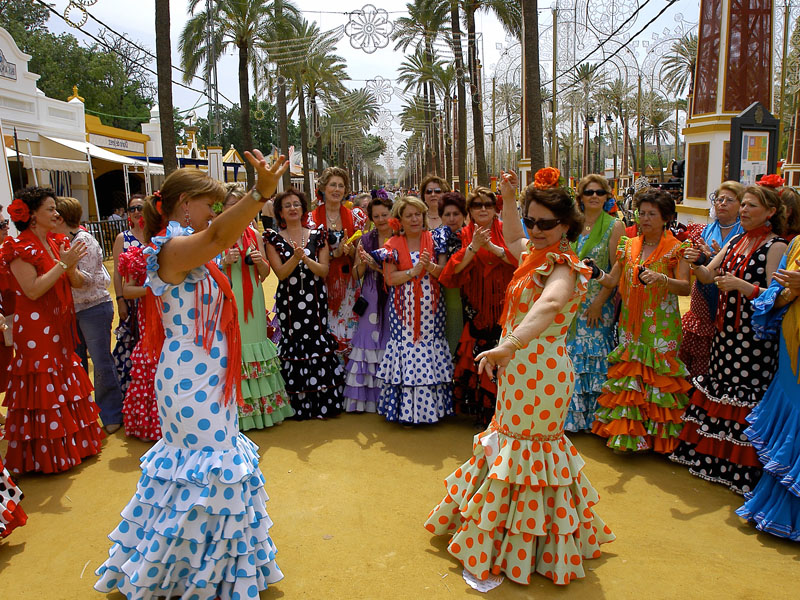
Great artists Diego Velázquez, Bartolomé Esteban Murillo, and Pablo Picasso lived here. The prototypes of famous works whose names have become household words—Figaro, Carmen, and Don Juan—lived here. It was in Andalusia that bullfighting was born, and the very first bullring was built in the city of Ronda. And the art of flamenco, which emerged in the 18th century and encompassed styles of singing, dance, and guitar music, was poured into the rich soul and fiery blood of the Andalusians.
The region's income comes from agriculture, tourism, fishing, and mining. Spain produces 840,000 tons of olive oil annually, of which Andalusia produces 740,000 tons. Wheat, cotton, tobacco, sugar cane, citrus fruits, grapes, peaches, avocados, and mangoes are also grown here. Wine, spirits, and canned fruits and vegetables are produced. Cattle, sheep—primarily merinos—and a special breed of pigs for the production of ham and bullfighting bulls, called toro bravo, are bred on the pastures. Pyrites and coal, copper, polymetallic, and iron ores, and precious metals are mined.
 Andalusia is home to the automotive and aerospace industries, as well as 11 research centers and technology parks. One of the largest is the Andalusian Center for Marine Research and Technology at the University of Cadiz. There are ten universities in the autonomous region. The main research areas are telecommunications technology, biotechnology and renewable energy, aeronautics, and chemistry. Seville is home to the largest DNA bank.
The region has six airports, five of which are international. Ten seaports handle cargo and passenger traffic successfully, and the eleventh—the only river port in Spain—is located in Seville. Modern road transport infrastructure and developed air and rail links also play a significant role in the development of the autonomous region. The Andalusian government has developed a number of programs to support and strengthen the economy, attract foreign investors, and expand and develop business, including tourism, and the region has begun to successfully implement them.